
How do you remain strong when life seems to bring one painful experience after another?
It can be exhausting to face rejection, betrayal, or opposition, especially when you have done little to deserve the treatment you receive.
Joseph knew what it meant to endure such difficulties, and Genesis 49:24 offers an interesting perspective on how he remained steadfast.
Jacob’s description invites us to consider the role God’s help played in Joseph’s ability to persevere.
Genesis 49:24 Meaning (What This Bible Verse Really Means)
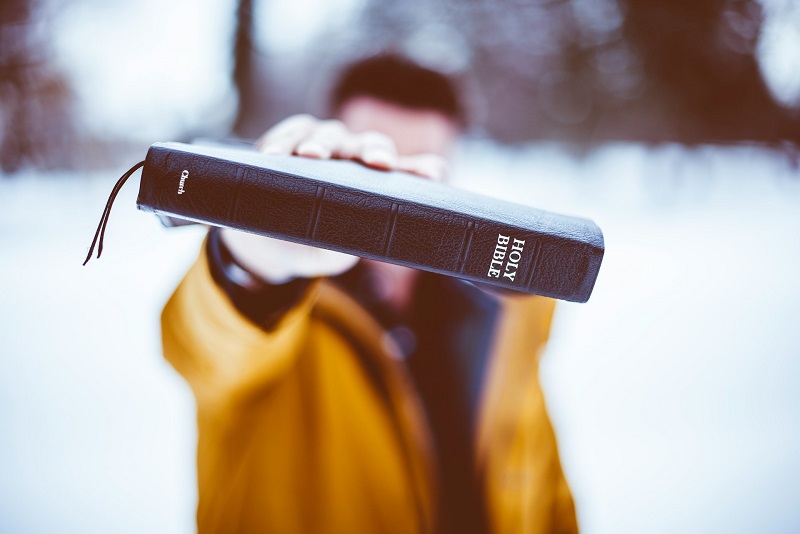
“But his bow remained strong. The arms of his hands were made strong, by the hands of the Mighty One of Jacob, (from there is the shepherd, the stone of Israel),” – Genesis 49:24 (WEB)
Genesis 49:24 reveals how Joseph remained strong despite the suffering and opposition he experienced, emphasizing that his endurance came from the power and faithfulness of God.
The verse forms part of Jacob’s final blessing upon Joseph, one of his twelve sons, shortly before Jacob died in Egypt.
Jacob uses the image of a strong bow and strengthened arms to describe Joseph’s ability to withstand the attacks directed against him.
These images are particularly meaningful because Joseph’s life had been filled with circumstances that could have overwhelmed him.
He was betrayed by his brothers, sold into slavery, falsely accused, and imprisoned for a crime he had not committed.
For many years, Joseph lived far away from his family, facing uncertainty about his future.
Yet those experiences did not destroy him.
Instead, the biblical narrative repeatedly emphasizes that God was with Joseph throughout his difficulties.
Genesis 49:24 connects Joseph’s remarkable endurance directly to divine strength.
Jacob does not portray Joseph as someone who overcame every obstacle simply because of his natural abilities.
He identifies the Mighty One of Jacob as the source of Joseph’s strength.
This distinction is essential to understanding the verse.
Joseph demonstrated wisdom, responsibility, patience, and perseverance, but the biblical account presents God’s presence as the foundation of his success.
The verse also introduces two important descriptions associated with God: the Shepherd and the Stone of Israel.
These expressions communicate different aspects of God’s relationship with His people.
The image of a shepherd suggests guidance, care, and protection.
A shepherd watches over the flock, leads it toward nourishment, and protects it from danger.
The image of a stone or rock suggests strength, stability, and dependability.
Together, these descriptions portray God as both the One who cares for His people and the One upon whom they can depend.
The meaning of Genesis 49:24 therefore extends beyond Joseph’s personal resilience.
It reveals Jacob’s understanding of the God who had sustained his family through generations of uncertainty.
The same God who guided Abraham, Isaac, and Jacob had also been present with Joseph during his years in Egypt.
Joseph’s life provides a powerful example of how divine faithfulness can remain evident even when circumstances are painful.
His brothers intended to remove him from their lives, but their actions eventually led to circumstances through which Joseph preserved the family during a severe famine.
His imprisonment appeared to delay his future, yet it became part of the sequence of events that brought him before Pharaoh.
His rise to authority allowed him to provide food for many people, including those who had betrayed him.
Genesis 49:24 does not teach that every person who trusts God will eventually receive political authority, wealth, or freedom from suffering.
Rather, it describes God’s strengthening presence in Joseph’s particular life and the role Joseph played within the unfolding history of Israel.
At its heart, Genesis 49:24 teaches that Joseph’s endurance was rooted in the help of the Mighty One of Jacob, the God who remained faithful through hardship and provided the strength necessary for Joseph to fulfill his responsibilities.
✅ Genesis 49:24 Explained (Breaking Down Each Part of the Verse)
“But his bow remained strong”
The opening phrase describes Joseph’s strength through the image of a bow that remains firm and effective.
In the ancient world, a bow was an important weapon used in hunting and warfare.
Its effectiveness depended upon its ability to withstand tension and release an arrow with sufficient force.
A damaged or weakened bow would be unreliable when its owner needed it.
Jacob uses this familiar image to portray Joseph’s endurance under pressure.
The word “but” is especially important because it connects the verse to the preceding statement.
Genesis 49:23 describes archers who attacked Joseph, shot at him, and persecuted him.
Those archers represent the hostility and opposition Joseph experienced.
Genesis 49:24 then introduces a contrast.
Although Joseph was attacked, his bow remained strong.
The imagery suggests that the opposition directed against him did not ultimately destroy his ability to stand firm.
This fits the events recorded throughout Joseph’s life.
His brothers became jealous of him because of Jacob’s favoritism and the dreams Joseph shared.
Their resentment eventually led them to sell him into slavery.
That betrayal separated Joseph from his family and placed him in circumstances he had not chosen.
Later, while serving in Potiphar’s household, Joseph was falsely accused and imprisoned.
These events could have produced bitterness, despair, or a willingness to abandon his responsibilities.
However, Genesis repeatedly describes Joseph continuing to act faithfully within the circumstances he faced.
He served responsibly in Potiphar’s household.
He gained the trust of the prison keeper.
He interpreted dreams and later provided wise counsel to Pharaoh.
His ability to remain useful and responsible despite opposition is consistent with Jacob’s description of a bow that remained strong.
The image should not be interpreted as suggesting that Joseph never experienced emotional pain.
Genesis records moments when Joseph wept, particularly during his encounters with his brothers.
His strength did not mean that he was unaffected by suffering.
Instead, the verse portrays him as someone who endured adversity without being completely overcome by it.
The phrase also belongs to the poetic language of Jacob’s blessing.
Joseph is not described as literally holding a bow during these events.
The weapon symbolizes resilience and the ability to withstand opposition.
By declaring that Joseph’s bow remained strong, Jacob emphasizes that the attacks against him did not prevent the larger purposes of God from unfolding through his life.
“The arms of his hands were made strong”
The next phrase continues the imagery of strength by focusing on Joseph’s arms and hands.
A bow requires strength and steadiness to use effectively.
The archer must be able to draw the bow, maintain control, and release the arrow.
By describing Joseph’s arms as strengthened, Jacob develops the image introduced in the previous phrase.
Joseph’s ability to remain strong is not presented as something that happened without assistance.
The wording indicates that his strength was supplied or reinforced.
This becomes clearer in the following phrase, which identifies God as the source of that strengthening.
Within the context of Joseph’s life, the image can be understood as representing his capacity to continue fulfilling responsibilities despite hardship.
Joseph encountered several situations in which he had little control over what happened to him.
He could not prevent his brothers from selling him into slavery.
He could not immediately escape the consequences of the false accusation made against him.
He also had to wait in prison before receiving the opportunity to appear before Pharaoh.
Nevertheless, he continued to demonstrate wisdom and responsibility.
His hands remained useful for the work placed before him.
In Potiphar’s household, Joseph became responsible for managing his master’s affairs.
In prison, he was entrusted with duties involving other prisoners.
After his appointment under Pharaoh, he organized the collection and distribution of food during the years of abundance and famine.
These responsibilities required practical wisdom, patience, and perseverance.
Jacob’s imagery of strengthened arms therefore fits Joseph’s history as someone who continued to act effectively despite opposition.
The phrase also highlights the difference between strength and the absence of difficulty.
Joseph’s arms were strengthened because he faced circumstances requiring endurance.
His life was not free from challenges.
Instead, the biblical narrative portrays him receiving the help necessary to continue through them.
For Christians, this provides an important distinction.
Divine help does not always involve the immediate removal of every obstacle.
Sometimes the biblical account emphasizes the strength needed to remain faithful while difficulties continue.
In Genesis 49:24, Jacob celebrates Joseph’s endurance while preparing to identify the God who made that endurance possible.
“by the hands of the Mighty One of Jacob”
This phrase identifies the source of Joseph’s strength.
Jacob declares that Joseph’s arms were strengthened by the hands of the Mighty One of Jacob.
The title “Mighty One of Jacob” refers to God.
It emphasizes His power and His relationship with Jacob and his family.
The expression is especially meaningful because Jacob is speaking near the end of his own life.
He has experienced God’s guidance through many difficult circumstances.
As a young man, Jacob fled from his brother Esau after the conflict surrounding Isaac’s blessing.
He spent years working for Laban and faced uncertainty concerning his future.
He later returned to Canaan, where he encountered additional family difficulties.
One of the most painful experiences of his life was the apparent death of Joseph.
For many years, Jacob believed that his beloved son had been killed.
Yet he eventually learned that Joseph was alive and had become a ruler in Egypt.
By referring to God as the Mighty One of Jacob, the patriarch connects Joseph’s strength with the God who had guided his own life.
The image of God’s hands communicates divine power and activity.
In biblical language, God’s hand is often associated with His ability to act, protect, deliver, or accomplish His purposes.
Here, the hands of God strengthen Joseph’s arms.
The imagery creates a direct relationship between divine power and human endurance.
Joseph’s strength is presented as dependent upon God rather than entirely self-produced.
This interpretation is consistent with the wider story of Joseph.
Genesis 39 repeatedly states that the Lord was with him.
When Joseph interpreted Pharaoh’s dreams, he acknowledged that the interpretation belonged to God.
His rise to authority was therefore not portrayed merely as the result of personal ambition.
The biblical narrative emphasizes divine involvement throughout his journey.
This does not mean that Joseph’s decisions were unimportant.
He still acted responsibly, exercised wisdom, and fulfilled the duties entrusted to him.
However, Jacob’s blessing identifies God as the ultimate source of the strength that enabled him to endure.
The phrase also connects Joseph’s personal history with the covenant family.
The God who helped Joseph was the same God who had made promises to Abraham, Isaac, and Jacob.
His faithfulness was not limited to one generation.
Joseph’s experiences became another part of the continuing history of God’s dealings with the family.
“from there is the shepherd, the stone of Israel”
The final phrase introduces two important images: the shepherd and the stone of Israel.
These descriptions are commonly understood as referring to God, although the Hebrew wording is difficult and has been interpreted in different ways.
Some translations connect the titles directly with God as the Shepherd and Rock of Israel.
Others preserve wording that allows for discussion about the relationship between the titles and the preceding reference to the Mighty One of Jacob.
Within the immediate context, Jacob is emphasizing the divine source of Joseph’s strength.
The description of a shepherd fits this emphasis.
A shepherd was responsible for guiding, feeding, and protecting a flock.
Sheep depended upon the shepherd for direction and safety.
The image therefore communicates care and faithful guidance.
This description would have been familiar to Jacob.
He had spent many years caring for livestock while working for Laban.
He understood the responsibilities of a shepherd and the dangers that could threaten a flock.
Earlier in Genesis 48:15, Jacob described God as the One who had shepherded him throughout his life.
That statement provides an important connection to Genesis 49:24.
Jacob had personally experienced God’s guidance and now speaks about divine strength in relation to Joseph.
The image of the stone or rock communicates a different but complementary idea.
A rock can represent firmness, stability, and dependability.
Unlike something fragile or easily moved, a solid rock provides an image of strength that can withstand pressure.
When applied to God, the imagery emphasizes His reliability and enduring power.
The combination of shepherd and stone is particularly meaningful.
A shepherd suggests personal care and guidance.
A stone or rock suggests stability and strength.
Together, the images portray God as both caring and dependable.
This fits the story of Joseph.
During his years of suffering, Joseph needed guidance and protection.
He also needed strength to remain faithful and fulfill his responsibilities.
The biblical narrative presents God as providing what Joseph needed through the different stages of his life.
Some Christian interpreters also connect the shepherd and stone imagery with later biblical descriptions of Jesus Christ.
The New Testament presents Jesus as the Good Shepherd in John 10 and uses cornerstone imagery in passages such as Ephesians 2:20 and 1 Peter 2:6.
These connections can be meaningful within a broader Christian reading of Scripture.
However, Genesis 49:24 does not explicitly name Jesus or explain those later New Testament teachings.
Its immediate context concerns Jacob’s blessing upon Joseph and the God who strengthened him.
The final phrase therefore completes the verse by emphasizing the power, guidance, and dependability of God.
✅ Genesis 49:24 Context (Understanding the Verse in Its Setting)
Genesis 49:24 appears within Jacob’s final blessing upon Joseph, recorded in Genesis 49:22-26.
The chapter takes place near the end of Jacob’s life in Egypt.
Jacob has gathered his twelve sons to speak concerning their futures and the generations that will descend from them.
His declarations contain blessings, warnings, and descriptions of the characteristics associated with the tribes of Israel.
Joseph receives one of the longest and most favorable blessings in the chapter.
Understanding the circumstances of Joseph’s life helps explain why Jacob emphasizes his endurance and God’s strengthening power.
Joseph was born to Jacob and Rachel.
Rachel had experienced years of childlessness before giving birth to him.
Genesis 30:22-24 records Joseph’s birth and Rachel’s recognition of God’s involvement.
As Joseph grew older, Jacob showed him special affection.
Genesis 37 records that Jacob gave Joseph a distinctive garment.
This favoritism contributed to resentment among Joseph’s brothers.
Their hostility increased after Joseph shared dreams suggesting that he would one day occupy a position of authority over his family.
The brothers eventually plotted against him.
While Joseph was visiting them in the fields, they seized him and placed him in a pit.
He was later sold to traders who took him to Egypt.
His brothers then deceived Jacob into believing that Joseph had been killed.
This event marked the beginning of Joseph’s long separation from his family.
In Egypt, Joseph became a servant in the household of Potiphar, an officer of Pharaoh.
Genesis 39 repeatedly emphasizes that the Lord was with Joseph.
His work prospered, and Potiphar eventually placed him in charge of his household.
However, Joseph’s circumstances changed when Potiphar’s wife falsely accused him.
He was sent to prison despite refusing her advances.
Even in prison, the biblical narrative continued to describe God’s presence with him.
Joseph gained the confidence of the prison keeper and received responsibility over other prisoners.
During this period, he interpreted the dreams of Pharaoh’s cupbearer and baker.
The interpretations came to pass, but Joseph remained imprisoned for some time.
Later, Pharaoh experienced troubling dreams that his advisers could not explain.
The cupbearer remembered Joseph, and he was brought before Pharaoh.
Joseph explained that the dreams revealed seven years of abundance followed by seven years of severe famine.
He also recommended that Egypt store food during the years of abundance.
Pharaoh recognized Joseph’s wisdom and appointed him to a position of authority over Egypt.
Joseph was thirty years old when he entered Pharaoh’s service.
During the prosperous years, he supervised the collection and storage of grain.
When the famine began, Egypt had food available.
The famine eventually affected Canaan, where Jacob and his family were living.
Jacob sent his sons to Egypt to purchase grain.
Joseph recognized his brothers when they appeared before him, but they did not recognize him.
Through a series of encounters, Joseph tested their attitudes and eventually revealed his identity.
Genesis 45 records Joseph explaining that God had sent him ahead to preserve life.
His words showed that he recognized God’s involvement in the events that had brought him to Egypt.
Joseph then arranged for Jacob and the rest of the family to move there.
Jacob was reunited with the son he had believed dead for many years.
Genesis 47:28 records that Jacob lived in Egypt for seventeen years and reached the age of 147.
As his death approached, he began preparing his family for the future.
Genesis 48 describes Jacob blessing Joseph’s sons, Ephraim and Manasseh.
He gave them a special place within the family and spoke concerning their descendants.
Genesis 49 then records Jacob gathering all twelve sons.
He addresses them individually, beginning with Reuben.
Some declarations contain warnings connected to earlier misconduct.
Others describe future strength, leadership, prosperity, or conflict.
Joseph’s blessing begins in Genesis 49:22.
Jacob describes him as a fruitful vine whose branches extend over a wall.
This image emphasizes fruitfulness and growth.
Genesis 49:23 then introduces the image of archers who attacked and persecuted Joseph.
The description reflects the hostility Joseph experienced throughout his life.
His brothers had rejected him, and he later suffered injustice in Egypt.
Genesis 49:24 responds to that opposition.
Although Joseph was attacked, his bow remained strong.
His arms were strengthened by the Mighty One of Jacob.
The verse then introduces the images of the Shepherd and the Stone of Israel.
These descriptions emphasize divine guidance, protection, and stability.
The following verse, Genesis 49:25, continues by identifying God as the source of Joseph’s blessings.
Jacob speaks of blessings from heaven above, the deep below, and the breasts and womb.
These images communicate provision and fruitfulness.
Genesis 49:26 concludes Joseph’s blessing by describing extraordinary blessings resting upon his head.
Jacob also refers to Joseph as separated or distinguished from his brothers.
This description recalls Joseph’s painful separation and the prominent position he eventually occupied.
Genesis 49:27 then records Jacob’s declaration concerning Benjamin.
Genesis 49:28 summarizes the blessings given to all twelve sons and identifies them as the twelve tribes of Israel.
Afterward, Jacob gives instructions concerning his burial in Canaan.
Genesis 49:33 records his death.
The wider context therefore shows that Genesis 49:24 is part of a declaration celebrating Joseph’s endurance and recognizing God’s involvement in his life.
Joseph’s experiences had been marked by severe opposition, but the biblical narrative repeatedly emphasizes that God remained with him.
His eventual position in Egypt allowed him to preserve many lives, including those of his own family.
Jacob’s words bring these themes together through the imagery of a strong bow, strengthened arms, and the Mighty One of Jacob.
✅ Genesis 49:24 Lessons (What We Can Learn From This Verse)
1. God can strengthen us during difficult circumstances
Genesis 49:24 describes Joseph’s bow remaining strong despite the attacks directed against him.
The verse then identifies God as the One who strengthened his arms.
This is particularly meaningful because Joseph had experienced serious hardship.
He was betrayed by his brothers, sold into slavery, falsely accused, and imprisoned.
Yet the biblical narrative repeatedly emphasizes that God was with him.
Joseph’s strength did not mean that he avoided suffering.
Instead, he received the help necessary to continue through difficult circumstances.
For Christians, this provides encouragement during seasons of uncertainty.
Faith does not guarantee that every problem will disappear immediately.
However, believers can seek God’s strength while continuing to fulfill their responsibilities.
Joseph’s example demonstrates that endurance can be meaningful even when circumstances remain challenging.
2. Opposition does not always determine the outcome of our lives
The preceding verse describes archers attacking Joseph.
Genesis 49:24 then declares that his bow remained strong.
The contrast shows that the hostility directed against Joseph did not ultimately destroy him.
His brothers intended to remove him from their lives by selling him into slavery.
Yet Joseph eventually became the means through which their family survived the famine.
His imprisonment also appeared to be a major setback.
Nevertheless, the events that followed brought him before Pharaoh and eventually into a position of authority.
This provides an important lesson about the limitations of human opposition.
Other people may act unfairly or attempt to prevent someone from succeeding.
Such actions can cause genuine harm and should not be minimized.
However, Joseph’s story demonstrates that the intentions of others do not necessarily determine the final direction of a person’s life.
Christians can learn to remain faithful without allowing resentment or discouragement to control their response to opposition.
3. True strength involves more than physical power
Jacob uses the imagery of a strong bow and strengthened arms to describe Joseph.
Although these images come from warfare, Joseph’s greatest achievements were not primarily military.
He demonstrated wisdom, responsibility, patience, and the ability to manage difficult situations.
In Potiphar’s household, he acted faithfully in the responsibilities entrusted to him.
In prison, he continued serving despite his circumstances.
Before Pharaoh, he acknowledged God as the source of the interpretation of dreams.
Later, he used his authority to preserve food and protect lives during the famine.
These actions reveal a form of strength that extends beyond physical ability.
For Christians, the passage encourages a broader understanding of endurance.
Strength may involve resisting temptation, remaining honest under pressure, or continuing to serve others during hardship.
It may also involve showing forgiveness when retaliation seems easier.
Joseph’s life demonstrates that moral courage and responsible action are important expressions of strength.
4. God’s guidance and stability are essential to faithful living
Genesis 49:24 describes God using the images of a shepherd and a stone or rock.
These expressions communicate guidance, protection, and dependability.
A shepherd cares for the flock and leads it through changing circumstances.
A solid rock provides an image of stability and strength.
Together, the descriptions emphasize different aspects of God’s relationship with His people.
Joseph’s life illustrates the importance of both.
He needed guidance when his circumstances changed unexpectedly.
He also needed stability when facing betrayal, injustice, and uncertainty.
For Christians, the imagery encourages dependence upon God’s wisdom and faithfulness.
Life can involve decisions that are difficult to make and circumstances that are impossible to predict.
Believers can seek direction through prayer, Scripture, and wise counsel while remaining committed to what is right.
The passage reminds readers that human strength is limited, but God’s character provides a dependable foundation for faith.
5. God’s faithfulness can be recognized across generations
Jacob identifies God as the Mighty One of Jacob.
This title connects Joseph’s experiences with the history of God’s dealings with his father and ancestors.
God had guided Abraham, Isaac, and Jacob through different circumstances.
Now Joseph had experienced divine help in Egypt.
The same family history continued across several generations.
This is significant because God’s promises were not limited to one individual’s lifetime.
The covenant established with Abraham continued through his descendants.
Joseph’s life became another important stage in that unfolding story.
For Christians, this provides a reminder that God’s purposes often extend beyond immediate circumstances.
People may contribute to work whose full significance becomes visible only later.
Faithful decisions, responsible service, and spiritual instruction can influence future generations.
The passage encourages believers to appreciate the history of God’s faithfulness while remaining attentive to their own responsibilities.
Genesis 49:24 Meaning (Conclusion)
The Genesis 49:24 meaning centers on Joseph’s endurance through opposition and the divine strength that enabled him to remain faithful.
Jacob describes Joseph’s bow as remaining strong despite the attacks directed against him.
He then declares that Joseph’s arms were strengthened by the hands of the Mighty One of Jacob.
These images communicate resilience, perseverance, and dependence upon God.
The verse is closely connected to Joseph’s remarkable life.
He experienced betrayal, slavery, false accusation, and imprisonment.
His circumstances changed repeatedly, often in ways that appeared to threaten his future.
Yet Genesis consistently emphasizes that God was with him.
Joseph eventually became a ruler in Egypt and played an important role in preserving many lives during the famine.
Jacob’s blessing recognizes the strength that enabled Joseph to endure those earlier difficulties.
The verse also introduces the descriptions of God as the Shepherd and the Stone of Israel.
The shepherd imagery emphasizes divine care, guidance, and protection.
The stone or rock imagery emphasizes stability, strength, and dependability.
Together, these descriptions portray God as the One who sustains His people through changing circumstances.
Genesis 49:24 therefore teaches more than the importance of personal determination.
It identifies God as the source of Joseph’s strength.
Joseph acted responsibly and demonstrated wisdom, but the biblical narrative presents divine help as central to his endurance.
For Christians, the passage offers encouragement during difficult circumstances.
It reminds believers that suffering does not necessarily mean God has abandoned them.
It also emphasizes the importance of remaining faithful when facing opposition or uncertainty.
Joseph’s story shows that strength can involve patience, integrity, forgiveness, and continued service.
The verse does not promise that every hardship will end in public success or material prosperity.
Instead, it presents Joseph’s particular experience as part of God’s larger purposes for the family of Israel.
His endurance became significant not only for himself but also for the many people whose lives were preserved through his work.
Genesis 49:24 ultimately reveals that Joseph remained strong because the Mighty One of Jacob strengthened him.
The God who had guided his ancestors continued to work through his life, providing the help necessary for him to endure adversity and fulfill his responsibilities.
Frequently Asked Questions About Genesis 49:24
What does Genesis 49:24 mean?
Genesis 49:24 means that Joseph remained strong despite the opposition he experienced because God strengthened him. Jacob uses the imagery of a strong bow and strengthened arms to describe Joseph’s endurance. The verse also refers to God as the Mighty One of Jacob and uses the images of a shepherd and stone to communicate divine guidance and stability.
What is the context of Genesis 49:24?
Genesis 49:24 appears within Jacob’s final blessing upon Joseph in Genesis 49:22-26. The preceding verse describes archers attacking and persecuting Joseph. Genesis 49:24 contrasts that hostility with Joseph’s endurance and identifies God as the source of his strength.
Who is speaking in Genesis 49:24?
Jacob, also called Israel, is speaking in Genesis 49:24. He is addressing his son Joseph as part of his final declarations concerning his twelve sons and their descendants shortly before his death in Egypt.
What does “his bow remained strong” mean?
The phrase uses a military image to describe Joseph’s endurance. Although he experienced betrayal, injustice, and opposition, he remained capable of fulfilling his responsibilities. The bow symbolizes resilience and strength rather than a literal weapon Joseph was using.
What does “the arms of his hands were made strong” mean?
The expression continues the imagery of a strong archer. It describes Joseph as receiving the strength necessary to endure opposition. The following phrase identifies God as the source of that strengthening.
Who is the Mighty One of Jacob in Genesis 49:24?
The Mighty One of Jacob is God. The title emphasizes His power and His relationship with Jacob and his family. In Genesis 49:24, Jacob identifies God as the One who strengthened Joseph during his difficulties.
What does the Shepherd of Israel mean in Genesis 49:24?
The shepherd imagery communicates divine care, guidance, and protection. Just as a shepherd leads and watches over a flock, God is portrayed as caring for His people. Jacob had previously described God as the One who shepherded him throughout his life in Genesis 48:15.
What does the Stone of Israel mean?
The Stone of Israel is commonly understood as an image of God’s strength, stability, and dependability. The wording of Genesis 49:24 is difficult in Hebrew, but the rock or stone imagery is widely associated with God’s reliable protection and power.
Does Genesis 49:24 refer to Jesus Christ?
Genesis 49:24 does not explicitly name Jesus Christ. Its immediate context concerns God’s strengthening of Joseph. However, Christians may recognize connections between its shepherd and stone imagery and New Testament descriptions of Jesus as the Good Shepherd and the cornerstone.
How did God strengthen Joseph?
Genesis repeatedly states that the Lord was with Joseph during his time in Egypt. Joseph received responsibility in Potiphar’s household, experienced God’s help while imprisoned, and later interpreted Pharaoh’s dreams. His wisdom and leadership enabled him to preserve food and help many people survive the famine.
Who were the archers mentioned before Genesis 49:24?
The archers in Genesis 49:23 are part of the poetic imagery describing the hostility Joseph experienced. They are commonly understood as representing his opponents, including those who betrayed or mistreated him. The verse does not identify them as literal archers involved in a particular battle.
Why is Genesis 49:24 important?
Genesis 49:24 is important because it identifies divine help as the foundation of Joseph’s endurance. It connects his ability to withstand opposition with the faithfulness of the God who had guided his family through generations.
What happened immediately after Genesis 49:24?
Genesis 49:25 continues Jacob’s blessing upon Joseph by describing God as the Almighty who provides blessings from heaven above, the deep below, and the breasts and womb. These images emphasize provision and fruitfulness.
What can Christians learn from Genesis 49:24?
Christians can learn the importance of depending upon God during hardship, remaining faithful despite opposition, and recognizing that strength involves more than physical ability. The verse also encourages trust in God’s guidance and dependability through changing circumstances.
Other Blog Posts

Grounded in faith and driven by purpose, I’m a Christian blogger and online research specialist with a passion for God’s Word, lifelong learning, and healthy living.