
The qualities that make someone strong can also make them intimidating.
Courage, determination, and a willingness to fight may be valuable in difficult situations, yet these same traits can become dangerous depending on how they are used.
This tension makes Genesis 49:27 particularly interesting, as Jacob uses the image of a wolf to describe Benjamin.
Understanding this comparison offers insight into the kind of future his words suggest for Benjamin’s tribe.
Genesis 49:27 Meaning (What This Bible Verse Really Means)
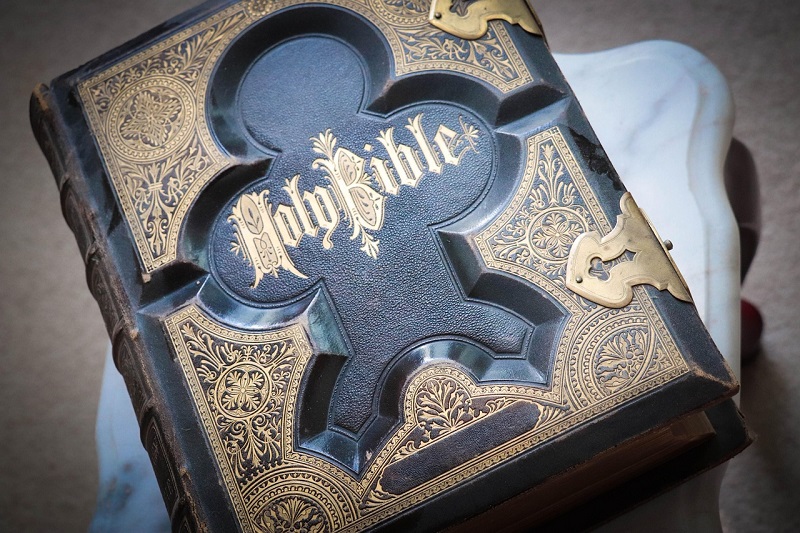
“Benjamin is a ravenous wolf. In the morning he will devour the prey. At evening he will divide the plunder.” – Genesis 49:27 (WEB)
Genesis 49:27 describes Jacob’s final declaration concerning his youngest son, Benjamin, using the image of a ravenous wolf to portray the strength, fierceness, and military character associated with Benjamin’s descendants.
The verse appears near the conclusion of Jacob’s blessings to his twelve sons, shortly before his death in Egypt.
Unlike some of the other declarations in Genesis 49, Benjamin’s blessing is brief but filled with powerful imagery.
Jacob compares Benjamin to a wolf that attacks its prey in the morning and divides the spoils in the evening.
This comparison is not intended to describe Benjamin as literally becoming an animal.
Instead, it uses the behavior of a fierce predator to communicate characteristics that would become associated with the tribe descended from him.
The meaning of Genesis 49:27 becomes clearer when we recognize that Jacob’s words look beyond Benjamin’s personal life.
Throughout Genesis 49, Jacob speaks about his sons in ways that anticipate the future of their descendants.
Benjamin’s declaration therefore concerns the tribe that would eventually bear his name.
The image of a ravenous wolf suggests a people capable of aggressive action, determined fighting, and success in conflict.
Wolves are known for pursuing prey, and the imagery emphasizes the intensity with which Benjamin’s descendants would engage their opponents.
The references to morning and evening add another dimension to the description.
The wolf devours its prey in the morning and divides the plunder in the evening, presenting a picture of successful activity extending across the day.
This language conveys victory and the possession of spoils following conflict.
It does not necessarily mean that the tribe of Benjamin would fight only at particular times of day.
Rather, the morning and evening imagery contributes to the poetic description of a powerful and successful warrior.
The later history of Benjamin provides several examples of the tribe’s military reputation.
Judges 20 describes Benjaminite warriors displaying considerable skill and determination during a conflict with the other tribes of Israel.
The tribe also produced important figures such as King Saul, Israel’s first king, and Jonathan, who was known for his courage in battle.
These later events help readers understand why the imagery of a fierce wolf is appropriate within the broader biblical narrative.
However, the verse should not be interpreted as an unconditional endorsement of violence.
The Bible records both admirable courage and serious wrongdoing among Benjamin’s descendants.
The same strength that can be used to defend others can also become destructive when separated from righteousness.
Genesis 49:27 therefore presents a description of tribal character rather than a command for believers to imitate aggressive behavior.
At its heart, the verse portrays Benjamin’s descendants as fierce and formidable, particularly in situations involving conflict.
Jacob’s final words reveal that the tribe of Benjamin would have a distinctive place within Israel’s history, marked by strength, determination, and a reputation for fighting.
✅ Genesis 49:27 Explained (Breaking Down Each Part of the Verse)
“Benjamin is a ravenous wolf”
The opening statement compares Benjamin to a ravenous wolf, establishing the central image of the verse.
A wolf is a powerful predator known for hunting and pursuing its prey.
The word “ravenous” emphasizes intense hunger and eagerness to seize food.
When applied to Benjamin, the image communicates fierceness, aggression, and formidable strength.
Jacob is using figurative language to describe the character associated with Benjamin’s descendants.
The comparison is especially meaningful because the blessings in Genesis 49 often use animals and other images to portray the future of individual tribes.
Judah, for example, is compared to a lion in Genesis 49:9.
Issachar is described as a strong donkey in Genesis 49:14.
Benjamin’s comparison to a wolf belongs to this same poetic style.
The different animals communicate different characteristics.
In Benjamin’s case, the emphasis falls on the behavior of a predator that aggressively pursues and overcomes its prey.
This imagery is commonly understood as pointing toward the military character of the tribe of Benjamin.
Later biblical accounts describe Benjaminite warriors as skilled and determined fighters.
Judges 20:16 mentions seven hundred selected men from Benjamin who were left-handed and capable of slinging stones with remarkable accuracy.
The passage describes their ability to strike a target without missing.
This reputation for military skill provides an interesting connection to Jacob’s earlier declaration.
The wolf imagery also appears in a darker context when considered alongside the conflict recorded in Judges 19–21.
During that period, the tribe of Benjamin became involved in a devastating civil war with the other tribes of Israel.
The conflict demonstrated Benjamin’s willingness to fight fiercely, even against fellow Israelites.
This shows why the image should not automatically be treated as entirely positive.
A ravenous wolf can represent strength and effectiveness, but it can also suggest dangerous aggression.
Genesis 49:27 does not explicitly praise every action that Benjamin’s descendants would later perform.
It describes a characteristic associated with the tribe.
The image therefore points to fierce fighting ability without suggesting that every use of that ability would be morally right.
“In the morning he will devour the prey”
The second statement develops the image of Benjamin as a hunting wolf.
The wolf is pictured seizing and consuming its prey in the morning.
This portrays an animal that acts decisively and successfully rather than remaining passive.
Within the context of Jacob’s declaration, the language suggests military effectiveness and the ability to overcome opponents.
The word “devour” emphasizes the completeness and intensity of the wolf’s attack.
It communicates more than simply approaching or threatening an enemy.
The predator succeeds in taking its prey.
Applied figuratively to Benjamin’s descendants, this suggests a tribe capable of forceful action in battle.
The reference to morning contributes to the poetic imagery.
Morning often marks the beginning of daily activity, and here it forms the first part of a description that continues into the evening.
The verse does not explain that Benjamin would achieve victories specifically during the morning hours.
Instead, it presents the wolf as actively obtaining prey at the beginning of the day.
This creates a picture of energy, determination, and successful pursuit.
The military history of Benjamin provides examples that are consistent with this imagery.
The tribe produced warriors who were known for their fighting ability.
One of the most prominent descendants of Benjamin was Saul, the son of Kish, who became Israel’s first king.
According to 1 Samuel 9:1-2, Saul belonged to the tribe of Benjamin.
During his reign, he led Israel in military conflicts against surrounding enemies.
His son Jonathan also demonstrated remarkable courage.
In 1 Samuel 14, Jonathan and his armor-bearer attacked a Philistine outpost, contributing to a larger victory for Israel.
Such accounts illustrate the fighting reputation associated with Benjamin’s descendants.
However, Genesis 49:27 does not specifically identify Saul, Jonathan, or any other individual as the exclusive fulfillment of the prophecy.
Its language is broader, describing a characteristic of the tribe.
The image of devouring prey therefore communicates Benjamin’s capacity for decisive and forceful action rather than predicting one particular battle.
“At evening he will divide the plunder”
The final statement completes the picture of the wolf’s successful activity.
After devouring prey in the morning, the wolf is described as dividing the plunder in the evening.
The word “plunder” refers to possessions or goods taken following a successful attack or military victory.
In ancient warfare, victorious armies sometimes collected and distributed the possessions of defeated enemies.
Jacob’s imagery draws on this idea to portray Benjamin as successful in conflict.
The wolf does not merely pursue its prey.
It obtains something from the encounter and possesses enough to divide.
This suggests victory followed by the enjoyment or distribution of what has been gained.
The reference to evening creates a contrast with the earlier mention of morning.
Together, the two expressions describe activity spanning the day.
The wolf begins by devouring prey and ends by dividing the spoils.
This progression emphasizes the completeness of the image.
The predator has acted, overcome its prey, and obtained the results of its success.
In relation to Benjamin, the statement is commonly understood as anticipating the tribe’s military achievements.
The imagery fits the broader pattern of Jacob’s blessings, where poetic descriptions point toward the characteristics and future circumstances of his descendants.
Some Christian interpreters have also connected the evening imagery with later individuals from Benjamin’s tribe.
For example, the apostle Paul identified himself as belonging to the tribe of Benjamin in Philippians 3:5.
His transformation from a persecutor of Christians into a preacher of the gospel has sometimes been considered in symbolic interpretations of this verse.
However, Genesis 49:27 does not explicitly refer to Paul’s conversion or ministry.
Its immediate context concerns Jacob’s declaration about Benjamin and his descendants.
The most direct understanding of the phrase is therefore connected to the wolf imagery and the tribe’s reputation for strength in conflict.
It is also important to distinguish description from moral approval.
The verse does not teach that taking possessions through violence is inherently righteous.
Rather, it uses the familiar imagery of victory and spoils to describe the fierceness and success associated with Benjamin.
The final statement brings Jacob’s blessing to a forceful conclusion, presenting Benjamin as a tribe capable of overcoming opposition and securing the results of victory.
✅ Genesis 49:27 Context (Understanding the Verse in Its Setting)
Genesis 49:27 appears near the end of Jacob’s final declarations concerning his twelve sons.
The chapter records Jacob gathering his children shortly before his death and speaking about what would happen to them and their descendants in the days ahead.
Benjamin is the final son addressed in this series of declarations.
To understand the significance of his blessing, it is helpful to consider Benjamin’s place within Jacob’s family and the events surrounding the final chapter of Jacob’s life.
Benjamin was the youngest son of Jacob and the second son born to Rachel.
His birth is recorded in Genesis 35:16-20.
Rachel went into difficult labor while the family was traveling toward Ephrath.
As she was dying, she named the child Benoni, a name associated with her sorrow.
Jacob, however, named him Benjamin.
The name Benjamin is commonly understood to mean “son of the right hand.”
Rachel died shortly after giving birth, making Benjamin’s arrival one of the most painful events in Jacob’s family history.
Benjamin and Joseph were the two sons Jacob had through Rachel, the wife he especially loved.
This relationship contributed to Benjamin’s important place within the family.
After Joseph was sold into slavery by his brothers, Jacob believed that Joseph had been killed.
Benjamin remained the only son of Rachel whom Jacob believed was still alive.
Consequently, Jacob became particularly protective of him.
This concern becomes evident in the account of the famine that brought Jacob’s sons to Egypt.
When the brothers first traveled to Egypt to purchase food, Jacob did not allow Benjamin to accompany them.
Genesis 42:4 explains that Jacob feared harm might come to him.
Unknown to the family, Joseph had risen to a position of authority in Egypt.
Joseph recognized his brothers when they came to purchase grain, but they did not recognize him.
During their encounters, Joseph insisted that Benjamin be brought to Egypt.
Jacob initially resisted the request because he feared losing another son of Rachel.
Eventually, the severity of the famine made another journey necessary.
Judah promised to take responsibility for Benjamin’s safety, and Jacob reluctantly allowed him to accompany his brothers.
The events that followed tested the brothers’ attitudes toward Benjamin.
Joseph arranged for his silver cup to be placed in Benjamin’s sack.
When the cup was discovered, the brothers faced the possibility of Benjamin remaining in Egypt as a servant.
Judah then offered himself in Benjamin’s place.
This response demonstrated a significant change from the earlier occasion when the brothers had sold Joseph.
Joseph eventually revealed his identity, and the family was reunited.
Jacob later moved to Egypt with his household, where he spent the remaining years of his life.
Genesis 47:28 states that Jacob lived in Egypt for seventeen years and reached the age of 147.
As his death approached, Jacob began preparing his family for the future.
Genesis 48 records him blessing Joseph’s sons, Ephraim and Manasseh.
In Genesis 49, he gathers his twelve sons and speaks concerning their descendants.
The chapter begins with Reuben, Jacob’s firstborn.
Reuben receives a declaration that addresses his earlier misconduct and the loss of his preeminence.
Simeon and Levi are confronted with their violent actions.
Judah receives words associated with leadership and kingship.
The remaining sons are addressed through various descriptions and images.
Some declarations concern prosperity, while others emphasize conflict, strength, or distinctive characteristics.
Joseph receives an extended blessing in Genesis 49:22-26.
His blessing includes imagery of fruitfulness and references to the hostility he experienced.
Jacob describes Joseph’s strength in relation to the help of the God of his fathers.
Benjamin’s declaration follows immediately afterward.
Genesis 49:27 compares him to a ravenous wolf that devours prey in the morning and divides plunder in the evening.
The contrast between Joseph’s extended blessing and Benjamin’s brief declaration is noticeable.
Although both were sons of Rachel, Jacob speaks about them using very different imagery.
Joseph is described through images of fruitfulness, endurance, and abundant blessing.
Benjamin is characterized by the fierceness and success of a predatory wolf.
The difference reflects the distinct future associated with each son’s descendants.
Genesis 49:28 then summarizes the entire series of declarations.
It identifies Jacob’s sons as the twelve tribes of Israel and states that he blessed each one according to his blessing.
This confirms that Benjamin’s words belong to the larger collection of patriarchal declarations concerning Israel’s tribes.
The following verses record Jacob’s burial instructions and death.
The later history of Benjamin provides additional context for understanding the imagery.
When the Israelites entered Canaan, the tribe of Benjamin received territory located between the tribal regions of Judah and Ephraim.
Its location became significant in several events throughout Israel’s history.
The book of Judges records a particularly troubling episode involving the tribe.
Judges 19 describes a terrible crime committed at Gibeah, a Benjaminite city.
The refusal to surrender those responsible contributed to a civil war between Benjamin and the other tribes of Israel.
Judges 20 portrays the Benjaminites as determined fighters who initially inflicted heavy losses on the opposing Israelite forces.
However, the conflict eventually resulted in a devastating defeat for Benjamin.
This account demonstrates both the tribe’s military strength and the destructive consequences of wrongdoing.
Later, the tribe produced Saul, Israel’s first king.
Saul’s son Jonathan also became known for his courage and military ability.
Other notable figures associated with Benjamin include Mordecai and Esther, whose family identity is connected to Benjamin in the book of Esther, and the apostle Paul, who identified himself as a Benjaminite.
These individuals lived in different periods and played different roles in biblical history.
Their stories should not all be treated as direct fulfillments of the wolf imagery.
Nevertheless, they demonstrate the continuing importance of Benjamin’s descendants within the biblical narrative.
Genesis 49:27 is best understood within this broader setting.
Jacob is speaking about the future of his youngest son’s tribe, using vivid language to describe a fierce and formidable character.
The verse completes the individual declarations of Genesis 49 before the narrative turns to Jacob’s final burial instructions.
✅ Genesis 49:27 Lessons (What We Can Learn From This Verse)
1. Strength should be guided by righteousness
Genesis 49:27 portrays Benjamin through the image of a ravenous wolf.
The comparison emphasizes fierceness, determination, and the ability to overcome opposition.
These characteristics can be useful in situations that require courage and decisive action.
However, strength alone does not determine whether an action is right.
The later history of Benjamin demonstrates this distinction.
The tribe produced courageous warriors, but it was also involved in the destructive conflict recorded in Judges 19–21.
That episode reveals how military determination can become dangerous when people defend wrongdoing.
For Christians, the lesson is that personal strength should be directed by godly principles.
Courage, confidence, and determination are valuable when used to protect others, pursue justice, and fulfill responsibilities.
Without moral guidance, those same qualities can contribute to pride, aggression, and unnecessary conflict.
The imagery of Benjamin encourages readers to consider not only whether they possess strength but also how they choose to use it.
2. God gives different characteristics and roles to different people
Benjamin’s blessing differs considerably from the declarations given to his brothers.
Joseph receives words emphasizing fruitfulness and abundant blessing, while Judah is associated with leadership and kingship.
Benjamin, by contrast, is described as a ravenous wolf.
These differences show that Jacob’s sons were not portrayed as having identical characteristics or futures.
Each tribe would occupy its own place within the history of Israel.
Christians can learn to appreciate the diversity of abilities and responsibilities among people.
Some individuals may demonstrate particular courage in difficult situations.
Others may be especially effective in providing encouragement, leadership, instruction, or practical assistance.
The presence of different abilities does not mean that everyone should be measured by the same standard.
What matters is how those abilities are used.
Genesis 49:27 reminds readers that distinctive characteristics can contribute to a larger purpose, even when they differ from the qualities associated with others.
3. Determination can be valuable when facing difficult challenges
The wolf imagery in Genesis 49:27 presents a creature that acts with intensity and does not easily abandon its pursuit.
The animal devours prey and divides the plunder, suggesting successful action in the face of opposition.
Within the context of Benjamin’s blessing, this points toward the tribe’s formidable character in conflict.
For Christians, the passage can prompt reflection on the importance of perseverance.
Life often involves responsibilities that require courage, patience, and sustained effort.
Difficult circumstances may tempt people to abandon what they know is right.
Determination can help believers remain faithful when challenges arise.
However, the passage should not be understood as encouraging relentless pursuit of personal advantage at the expense of others.
The wolf is a poetic image describing Benjamin’s tribe, not a universal model for Christian behavior.
The appropriate application is to recognize the value of perseverance while ensuring that it remains connected to wisdom and righteousness.
4. Natural abilities do not excuse wrongdoing
Benjamin’s descendants became known for military skill and determination.
Judges 20 records warriors who possessed impressive fighting abilities.
Yet the same chapter describes a conflict that brought severe consequences upon the tribe.
Their strength did not make every decision they made acceptable.
This provides an important reminder that ability and character are not the same thing.
A person may possess exceptional intelligence, influence, courage, or practical skill while still making harmful choices.
Christians are therefore encouraged to evaluate their conduct by what is right rather than by what they are capable of accomplishing.
Success does not automatically establish moral approval.
The tribe of Benjamin illustrates how remarkable ability can exist alongside serious failure.
The lesson is not that strength should be rejected, but that it should be exercised responsibly.
5. Our identity should not be limited to one characteristic
Genesis 49:27 describes Benjamin using the image of a fierce wolf.
However, the later history of Benjamin’s descendants includes people whose lives cannot be summarized by military aggression alone.
Jonathan demonstrated loyalty and courage.
Mordecai played an important role in protecting his people during the events recorded in Esther.
The apostle Paul became a prominent preacher of the gospel after his conversion.
These individuals show that the tribe’s history involved more than one kind of activity or contribution.
This provides a useful reminder for Christians about the complexity of personal identity.
People may possess strong characteristics, but those qualities do not define every aspect of their lives.
A person known for courage may also demonstrate compassion.
Someone with a forceful personality may learn patience and gentleness.
The image used in Jacob’s blessing describes an important feature associated with Benjamin’s descendants, but it does not provide a complete description of every individual who would belong to the tribe.
Christians can therefore learn to avoid reducing people to a single trait or reputation.
Genesis 49:27 Meaning (Conclusion)
The Genesis 49:27 meaning centers on Jacob’s description of Benjamin as a ravenous wolf, using vivid imagery to portray the fierce and formidable character associated with his descendants.
The verse describes the wolf devouring prey in the morning and dividing plunder in the evening.
These expressions communicate aggressive strength, successful pursuit, and the possession of spoils following conflict.
Within the context of Genesis 49, Jacob’s words concern the future of the tribe that would descend from Benjamin.
The imagery is therefore best understood as a poetic description of tribal characteristics rather than a literal prediction about Benjamin becoming an animal.
The later history of the tribe provides examples of the fighting reputation associated with this declaration.
Benjaminite warriors displayed considerable skill and determination, and the tribe produced important military figures such as Saul and Jonathan.
However, the biblical record also shows that strength could be used wrongly.
The civil war described in Judges 19–21 demonstrates that fierce determination does not automatically guarantee righteousness.
This distinction is important when interpreting Jacob’s blessing.
Genesis 49:27 describes Benjamin’s character and anticipated military strength without approving every act of violence committed by his descendants.
The verse also occupies a significant position within Jacob’s final address.
Benjamin is the last of the twelve sons to receive an individual declaration.
Immediately afterward, Genesis 49:28 summarizes the blessings and identifies the sons as the ancestors of the twelve tribes of Israel.
Jacob’s words about Benjamin therefore complete the series of distinct descriptions concerning his children.
For Christians, the passage offers an opportunity to reflect on the proper use of strength, the importance of courage, and the responsibility that accompanies personal abilities.
It reminds readers that determination can be valuable, but it must be guided by moral wisdom.
The verse also demonstrates how different tribes within Israel possessed distinct characteristics and histories.
Benjamin’s descendants would occupy their own place within the unfolding biblical narrative, sometimes displaying admirable courage and at other times experiencing the consequences of destructive decisions.
Genesis 49:27 ultimately presents Benjamin as a tribe marked by fierceness and fighting ability.
The image of the ravenous wolf captures this distinctive reputation while inviting readers to consider the difference between possessing strength and using it rightly.
Frequently Asked Questions About Genesis 49:27
What does Genesis 49:27 mean?
Genesis 49:27 means that Jacob describes Benjamin and his descendants using the image of a ravenous wolf. The comparison emphasizes fierceness, military strength, and success in conflict. The references to devouring prey and dividing plunder portray the tribe as capable of overcoming opponents and obtaining the spoils of victory.
What is the context of Genesis 49:27?
Genesis 49:27 appears during Jacob’s final declarations to his twelve sons before his death in Egypt. Benjamin is the last son addressed. Jacob uses the image of a ravenous wolf to describe the character associated with Benjamin’s descendants, after which Genesis 49:28 summarizes the blessings given to all twelve sons.
Why is Benjamin compared to a ravenous wolf?
Benjamin is compared to a ravenous wolf because the image communicates fierceness, aggression, and formidable fighting ability. The later history of the tribe of Benjamin includes skilled warriors and military figures, making the comparison consistent with its reputation for strength in conflict.
What does “ravenous wolf” mean in Genesis 49:27?
A ravenous wolf is a wolf characterized by intense hunger and aggressive pursuit of prey. In Genesis 49:27, the expression is figurative and describes the fierce, determined character associated with Benjamin’s descendants, particularly in military situations.
What does “In the morning he will devour the prey” mean?
The phrase portrays Benjamin as a wolf that successfully attacks and consumes its prey. It suggests forceful action and effectiveness in conflict. The reference to morning contributes to the poetic imagery rather than necessarily predicting battles at a specific time of day.
What does “At evening he will divide the plunder” mean?
The expression describes the distribution of spoils following a successful attack or victory. Within Jacob’s blessing, it suggests that Benjamin’s descendants would be formidable in conflict and capable of securing the results of military success.
Was Benjamin himself a violent person?
Genesis 49:27 does not provide enough information to conclude that Benjamin personally behaved violently. Jacob’s words are generally understood as describing the future character of the tribe descended from Benjamin. The verse should not be treated as a detailed account of Benjamin’s individual personality.
How was Genesis 49:27 fulfilled in the tribe of Benjamin?
The later history of Benjamin includes several examples consistent with the imagery of fierce warriors. Judges 20 describes the tribe’s military skill and determination, while Saul and Jonathan were prominent Benjaminite figures involved in warfare. These accounts illustrate the tribe’s fighting reputation, although the verse does not identify one event as its exclusive fulfillment.
Was King Saul from the tribe of Benjamin?
Yes. King Saul, Israel’s first king, belonged to the tribe of Benjamin. First Samuel 9:1-2 identifies his family background. His military leadership is one example of the prominent role Benjamin’s descendants played in Israel’s history.
Was the apostle Paul from the tribe of Benjamin?
Yes. Paul identified himself as belonging to the tribe of Benjamin in Philippians 3:5 and Romans 11:1. Some interpreters have drawn symbolic connections between his life and Genesis 49:27, but the verse itself does not explicitly predict Paul’s conversion or ministry.
Is Genesis 49:27 a positive or negative blessing?
Genesis 49:27 contains imagery that can suggest both strength and dangerous aggression. The wolf represents fierceness and success in conflict, but the verse does not explicitly approve every action associated with such characteristics. It is best understood as a description of Benjamin’s tribal character rather than an entirely positive or negative moral judgment.
What is the spiritual meaning of Genesis 49:27?
The spiritual lessons Christians may draw from Genesis 49:27 include the importance of using strength responsibly, exercising courage with wisdom, and recognizing that personal abilities do not automatically establish moral righteousness. The verse primarily concerns Benjamin’s descendants, so these applications should remain connected to its original context.
What happened immediately after Genesis 49:27?
Genesis 49:28 summarizes Jacob’s declarations to his sons, identifying them as the twelve tribes of Israel and stating that each received his own blessing. Jacob then gives instructions concerning his burial before dying in Genesis 49:33.
What can Christians learn from Genesis 49:27?
Christians can learn that strength and determination should be guided by righteousness. The verse encourages reflection on courage, perseverance, and the responsible use of personal abilities. It also reminds readers that possessing power or achieving success does not automatically make a person’s actions morally right.
Other Blog Posts

Grounded in faith and driven by purpose, I’m a Christian blogger and online research specialist with a passion for God’s Word, lifelong learning, and healthy living.