
It can be frightening to discover that danger does not always come from someone who appears powerful or threatening.
Sometimes, the greatest setbacks come from unexpected places, catching us off guard when we believe we are safe.
In Genesis 49:17, Jacob compares his son Dan to a serpent hiding along the road, capable of bringing down a horse and its rider.
This striking image raises questions about the kind of strength Jacob associates with Dan and his descendants.
Genesis 49:17 Meaning (What This Bible Verse Really Means)
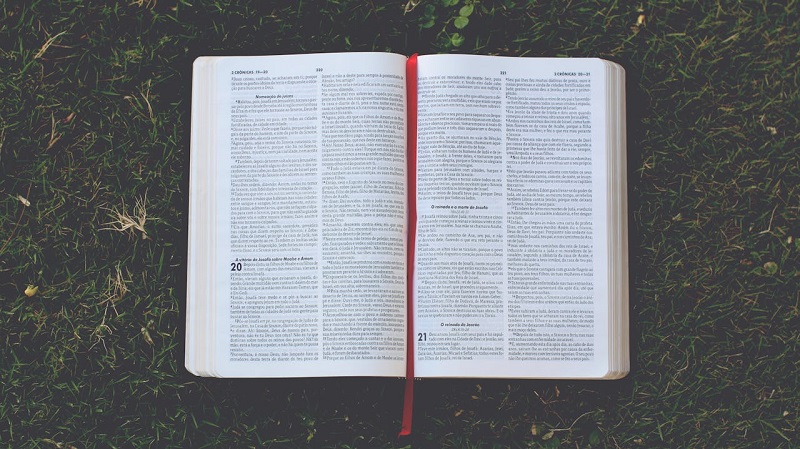
“Dan will be a serpent on the trail, an adder in the path, that bites the horse’s heels, so that his rider falls backward.” – Genesis 49:17 (WEB)
Genesis 49:17 describes Dan as a serpent positioned along a path, capable of bringing down a horse’s rider by striking at the animal’s heels.
The verse forms part of Jacob’s final declarations concerning his twelve sons and the future of the tribes that would descend from them.
Jacob uses the image of a snake to communicate a particular kind of strength associated with Dan.
Rather than describing an animal that overpowers its enemies through size or physical force, he chooses a creature capable of striking unexpectedly.
The comparison emphasizes the effectiveness of a carefully positioned attack.
A serpent may be much smaller than a horse, yet its bite can create consequences far greater than its size might suggest.
This contrast is central to the imagery.
The horse represents an animal associated with strength, speed, and the ability to carry a rider.
The serpent, by comparison, operates close to the ground.
It does not need to confront the rider directly.
Instead, it strikes the horse’s heels, causing the animal to react in a way that throws the rider backward.
The meaning of Genesis 49:17 becomes clearer when we recognize that Jacob’s words concern the anticipated characteristics of Dan’s descendants.
The tribe of Dan would eventually become one of the twelve tribes of Israel.
Its later history includes military conflict, territorial difficulties, and events involving unexpected attacks.
The serpent imagery is therefore commonly understood as suggesting cunning, tactical ability, or the capacity to overcome stronger opponents through surprise.
However, the verse does not explicitly identify one particular battle or individual as the fulfillment of Jacob’s declaration.
It presents a poetic description rather than a detailed account of future events.
The immediate context also deserves attention.
In Genesis 49:16, Jacob declares that Dan will judge his people as one of the tribes of Israel.
The following verse introduces the serpent comparison.
These statements belong together within Jacob’s blessing concerning Dan.
The first refers to Dan’s place among the tribes, while the second portrays the kind of forceful action associated with him.
The imagery should not automatically be interpreted as a condemnation of Dan.
Although serpents sometimes symbolize evil or deception elsewhere in Scripture, their meaning depends on the particular passage.
Here, the comparison appears within a declaration concerning Dan’s ability to affect a powerful opponent.
At the same time, the image is not entirely gentle or reassuring.
It involves a concealed danger and a sudden attack.
This makes the description more complex than a simple promise of prosperity or peaceful success.
Genesis 49:17 also appears immediately before Jacob’s brief prayer in Genesis 49:18.
There, Jacob declares that he has waited for Yahweh’s salvation.
Some interpreters connect this prayer with the threatening imagery concerning Dan.
However, the text does not explicitly explain why Jacob makes that statement at this particular point.
At its heart, Genesis 49:17 portrays Dan through an image of unexpected strength and tactical effectiveness.
The verse suggests that an apparently smaller or less powerful opponent can produce significant consequences through a carefully directed action.
Within Jacob’s final blessings, it contributes to the distinctive picture of the future associated with Dan and his descendants.
✅ Genesis 49:17 Explained (Breaking Down Each Part of the Verse)
“Dan will be a serpent on the trail”
The opening statement compares Dan to a serpent positioned along a trail.
This image introduces the main characteristic developed throughout the verse.
A serpent is not generally associated with the size or overwhelming physical power of a large animal.
Its effectiveness often depends on concealment, speed, and the ability to strike at a vulnerable point.
Jacob’s comparison therefore creates a picture of strength expressed through an unexpected form.
The serpent is located on a trail.
A trail is a route used by people or animals traveling from one place to another.
Its significance in the imagery is that it places the serpent where another creature may pass.
The snake does not need to pursue a horse across open ground.
It is already positioned along the route.
This setting makes the possibility of a sudden encounter central to the description.
The comparison is particularly meaningful when considered alongside the other animal images in Genesis 49.
Judah is described as a lion’s cub.
Issachar is compared to a strong donkey.
Naphtali is described through the image of a doe, while Benjamin is compared to a ravenous wolf.
Each comparison communicates a different impression.
Dan’s serpent imagery emphasizes a form of power that does not depend on physical size.
The serpent can remain unnoticed until the moment it strikes.
This suggests cunning or tactical effectiveness.
However, the verse does not explicitly say that Dan’s descendants would always rely on deception.
The image should not be expanded into a universal description of their moral character.
The Hebrew language also contains a notable connection between Dan’s name and the preceding verse.
Genesis 49:16 uses language concerning judgment, which relates to the meaning of Dan’s name.
The serpent comparison then develops the declaration through a different image.
Together, the verses portray Dan as a tribe with a recognized place in Israel and a capacity for forceful action.
The reference to the trail is important because it provides the setting for the attack described later.
The serpent is positioned where a larger animal may pass.
Its location allows it to affect an opponent that would otherwise possess a considerable physical advantage.
Genesis 49:17 therefore begins with an image of strategic positioning and the possibility of sudden action.
“an adder in the path”
The second phrase reinforces the serpent imagery by describing Dan as an adder in the path.
An adder is a type of snake, and the expression continues the picture of a potentially dangerous creature positioned along a route.
The wording does not introduce an entirely separate subject.
Instead, it develops the comparison already established in the first phrase.
Hebrew poetry frequently uses parallel expressions to communicate or strengthen an idea.
In this verse, the serpent on the trail and the adder in the path form a closely related pair of images.
Both descriptions emphasize the location of the snake.
It is not portrayed as a creature openly confronting a larger opponent.
It is situated along the route where another animal may travel.
This creates an impression of concealed danger.
The word translated as “adder” identifies the creature as a snake capable of causing harm.
The precise identification of the Hebrew term with a modern species is uncertain.
For this reason, the main meaning of the passage should not depend on identifying one particular kind of snake.
The important detail is the animal’s ability to strike unexpectedly.
The expression also emphasizes the vulnerability of travelers who encounter danger along an ordinary route.
A path may appear safe, yet the presence of a concealed snake can change the situation suddenly.
Within Jacob’s declaration, this imagery contributes to the description of Dan’s anticipated characteristics.
It suggests that Dan’s descendants may possess the ability to affect stronger opponents through methods that are not immediately obvious.
This interpretation is consistent with the final part of the verse, where the snake’s bite causes a horse’s rider to fall.
Nevertheless, the comparison should be interpreted within its historical and literary setting.
Genesis 49:17 does not provide a general instruction encouraging Christians to imitate the harmful behavior of a snake.
It is a poetic description concerning one of Israel’s tribes.
The emphasis is on the effectiveness of an unexpected attack rather than on establishing a moral principle about deception.
The second phrase therefore strengthens the central image by portraying Dan as a dangerous serpent positioned where a larger opponent may be vulnerable.
“that bites the horse’s heels”
The third phrase describes the action that makes the serpent dangerous.
It bites the heels of a horse.
This detail explains how an animal much smaller than a horse can affect it.
A horse possesses considerable physical strength.
It can move quickly, carry a rider, and serve important purposes in transportation or warfare.
In the ancient world, horses were particularly significant in military contexts.
They could provide mobility and contribute to the effectiveness of armies.
A serpent could not normally overpower such an animal through direct physical strength.
However, it could strike at a vulnerable part of the horse’s body.
The heels are located near the ground, making them accessible to a snake positioned along the path.
The image therefore emphasizes the importance of the point of attack.
The serpent does not attempt to overcome the horse by matching its size or strength.
It uses its position and ability to strike where the animal is exposed.
This creates a picture of tactical effectiveness.
A relatively small action can have consequences for a much larger opponent.
The imagery may suggest the ability of Dan’s descendants to confront stronger enemies through surprise or carefully directed attacks.
However, the verse does not specify which enemies would be involved.
Neither does it identify the exact military methods that the tribe would use.
The comparison is broad and poetic.
It communicates a characteristic rather than providing a detailed military prediction.
The reference to the horse also prepares readers for the final result of the bite.
The snake’s action affects more than the animal itself.
Because the horse carries a rider, the consequences extend to the person depending on the horse for support.
This connection is essential to the full meaning of the verse.
Jacob’s description is not merely about a snake injuring an animal.
It is about an apparently weaker creature disrupting the strength and stability of a more powerful opponent.
“so that his rider falls backward”
The final phrase describes the consequence of the serpent’s attack.
The horse’s rider falls backward.
This result completes the movement of the imagery.
The verse begins with a serpent positioned along a path.
It then describes the snake striking the horse’s heels.
The final statement shows that the bite causes the rider to lose his position.
This outcome is significant because the rider represents someone who benefits from the horse’s strength and mobility.
A person mounted on a horse possesses an advantage over someone traveling on foot.
The horse can provide speed, height, and assistance during conflict.
However, the serpent’s bite disrupts that advantage.
The rider falls despite the physical superiority of the animal beneath him.
The picture therefore emphasizes the vulnerability of apparent strength.
A powerful opponent may be affected by a smaller adversary acting at the right moment.
Within Jacob’s blessing, the result suggests that Dan could possess the ability to bring down opponents who appear stronger.
The image does not necessarily imply that Dan would achieve this through conventional military power.
Instead, it emphasizes the effectiveness of an unexpected strike.
Some interpreters connect this imagery with later events involving the tribe of Dan.
The account of Samson, who belonged to Dan, is sometimes mentioned because of his unusual methods of confronting the Philistines.
Others consider the tribe’s later military activities and territorial struggles.
These connections may illustrate similarities with the serpent imagery.
However, Genesis 49:17 does not explicitly identify Samson or any particular event as its fulfillment.
The passage should therefore not be restricted to one historical incident without clear textual support.
The final phrase also does not promise that Dan would always defeat stronger enemies.
The later history of the tribe includes difficulties and failures as well as examples of strength.
The emphasis of the verse is narrower.
Jacob portrays Dan through an image in which a seemingly weaker creature causes a powerful rider to fall.
The statement concludes the comparison by showing that unexpected strength can produce significant consequences.
✅ Genesis 49:17 Context (Understanding the Verse in Its Setting)
Genesis 49:17 appears during Jacob’s final address to his twelve sons, shortly before his death in Egypt.
The verse belongs to the declaration concerning Dan, one of the sons who would become the ancestors of Israel’s twelve tribes.
Jacob describes Dan through the image of a serpent that strikes a horse’s heels and causes its rider to fall backward.
Understanding the historical and literary setting helps explain why this unusual comparison appears among the patriarch’s final words.
The larger family history begins with God’s promises to Abraham.
In Genesis 12, God calls Abraham and promises to make him into a great nation.
The promise includes descendants, a land, and blessings connected with God’s purposes for Abraham’s family.
Abraham eventually becomes the father of Isaac.
Isaac later becomes the father of Esau and Jacob.
Although Jacob is the younger twin, he receives the blessing associated with the covenant family.
His life includes difficult relationships, journeys away from home, and repeated encounters with God.
After leaving Canaan, Jacob travels to the household of Laban.
There, he works for many years and marries Leah and Rachel.
His family grows as sons are born through Leah, Rachel, Bilhah, and Zilpah.
Dan is born during this period.
Genesis 30:1-6 records the circumstances surrounding his birth.
Rachel has not yet given birth to a child of her own and is distressed by her inability to conceive.
She gives her servant Bilhah to Jacob.
Bilhah gives birth to a son, whom Rachel names Dan.
Rachel explains the name by saying that God has judged her and heard her voice.
The name Dan is therefore associated with judgment.
This background becomes particularly relevant in Genesis 49:16, where Jacob declares that Dan will judge his people.
The following verse develops the blessing through the image of a serpent.
After the years spent with Laban, Jacob eventually returns to Canaan with his family.
The household experiences serious conflicts, including the jealousy surrounding Joseph.
Jacob’s special affection for Joseph contributes to resentment among his brothers.
Their hostility eventually leads them to sell Joseph into slavery.
Jacob is deceived into believing that Joseph has been killed.
Meanwhile, Joseph is taken to Egypt.
He experiences slavery and imprisonment before rising to a position of authority under Pharaoh.
Joseph becomes responsible for preparing Egypt for a severe famine.
When the famine reaches Canaan, Jacob sends his sons to Egypt to purchase food.
After several encounters, Joseph reveals his identity to his brothers.
The family is eventually reunited.
Joseph arranges for Jacob and his household to settle in Egypt, where they can receive provision during the famine.
Genesis 47:28 records that Jacob lived in Egypt for seventeen years and reached the age of 147.
As his death approaches, he begins making preparations concerning his family.
Genesis 48 describes Jacob blessing Joseph’s two sons, Ephraim and Manasseh.
He gives them a significant place among his descendants and speaks concerning their future.
Genesis 49 then records Jacob gathering his twelve sons.
He announces that he will tell them what will happen in the days ahead.
The chapter contains a series of declarations concerning the sons and the tribes that will descend from them.
Jacob begins with Reuben.
Although Reuben is his firstborn, he receives unfavorable words because of his earlier misconduct.
Simeon and Levi are addressed next.
Jacob condemns their violence and speaks of their descendants being divided and scattered.
Judah receives a prominent declaration associated with praise, leadership, and royal authority.
The imagery of a lion and a scepter distinguishes his blessing from those concerning several of his brothers.
Zebulun is associated with the coast and ships.
Issachar is compared to a strong donkey.
Jacob then turns to Dan.
Genesis 49:16 declares that Dan will judge his people as one of the tribes of Israel.
This statement is closely connected with the meaning of Dan’s name.
The verse recognizes Dan’s place among the tribes despite the different circumstances surrounding the births of Jacob’s sons.
Genesis 49:17 then describes Dan as a serpent along a path.
The serpent bites a horse’s heels, causing its rider to fall backward.
The comparison introduces a picture of unexpected strength and tactical effectiveness.
Rather than portraying Dan through the physical power of a large animal, Jacob uses a smaller creature capable of producing significant consequences.
The image is particularly distinctive because it involves an indirect attack.
The serpent does not strike the rider himself.
It bites the horse, causing the rider to lose his position.
This suggests an ability to affect a powerful opponent through a vulnerable point.
Immediately after the serpent comparison, Genesis 49:18 records Jacob expressing his expectation of Yahweh’s salvation.
The prayer interrupts the sequence of tribal declarations.
Some interpreters understand it as a response to the threatening imagery concerning Dan.
Others regard it as a broader expression of Jacob’s confidence in God’s deliverance.
The passage does not explicitly explain the reason for the prayer’s placement.
Genesis 49:19 then continues with the declaration concerning Gad.
Gad is described as facing attacks from hostile forces but responding against his attackers.
Asher receives a blessing concerning rich food and royal delicacies.
Naphtali is compared to a doe set free.
Joseph receives an extended blessing involving fruitfulness, opposition, strength, and divine help.
Benjamin receives the final individual declaration and is compared to a ravenous wolf.
Genesis 49:28 summarizes the entire address by identifying Jacob’s sons as the twelve tribes of Israel.
This summary confirms that the declarations concern the future family lines associated with each son.
The later history of Dan provides additional context for understanding the serpent imagery.
After Israel leaves Egypt, the descendants of Dan become one of the organized tribes of the nation.
Numbers 1:38-39 records the census of Dan’s men eligible for military service.
During the wilderness journey, Dan also occupies a recognized position within the arrangement of Israel’s camps.
Numbers 2:25-31 describes the camp of Dan and its place within the larger tribal organization.
The tribe therefore develops into a substantial family group with responsibilities within Israel.
After the Israelites enter Canaan, Dan receives a territorial inheritance.
Joshua 19:40-48 describes the territory allotted to the tribe.
Its original inheritance lies in a region associated with the central coastal plain and surrounding areas.
However, the tribe experiences difficulties establishing full control over its territory.
Judges 1:34 records that the Amorites forced the descendants of Dan into the hill country and prevented them from coming down into the valley.
This account shows that Dan’s later history was not characterized by uninterrupted military success.
The tribe encountered stronger opponents and territorial limitations.
Judges 18 provides another important account involving Dan.
The chapter describes men from the tribe searching for additional territory.
They send representatives to investigate the land.
The scouts eventually reach Laish, a city whose inhabitants are described as living securely.
The Danites later organize an armed expedition and attack the city.
They capture Laish, destroy it, and rebuild it under the name Dan.
The account involves reconnaissance, movement against a distant settlement, and a successful attack.
Because of these features, some interpreters connect the events with Jacob’s serpent imagery.
However, the narrative does not explicitly state that Judges 18 fulfills Genesis 49:17.
The connection should therefore be treated as a possible illustration rather than a certain interpretation.
Judges 18 also records serious religious wrongdoing among the Danites.
They take an idol and establish a form of worship associated with the image.
This detail is important because military success should not automatically be confused with divine approval of every action.
The biblical narrative presents the tribe’s conduct with moral and religious complexity.
Another significant figure associated with Dan is Samson.
Judges 13:2 identifies Manoah, Samson’s father, as a man from the tribe of Dan.
Samson becomes one of the judges of Israel during a period of Philistine oppression.
His life is recorded in Judges 13-16.
He possesses extraordinary physical strength and repeatedly confronts the Philistines.
Several of his actions involve unexpected methods rather than conventional military campaigns.
For example, Judges 15 describes Samson using the jawbone of a donkey to strike down a large number of Philistines.
Judges 16 records his final confrontation with the Philistines in the temple of Dagon.
These events have sometimes been associated with the serpent imagery because Samson could cause significant harm to powerful opponents through unusual actions.
Nevertheless, Genesis 49:17 does not name Samson.
The passage should not be treated as a direct prediction of his life without acknowledging that the connection is interpretive.
The later history of Dan also includes references to its geographical position.
The expression “from Dan to Beersheba” appears in several Old Testament passages as a way of describing the extent of Israel from north to south.
This reflects the importance of Dan as a recognizable location in the northern part of the land.
However, this geographical role is separate from the immediate serpent comparison in Genesis 49:17.
Another relevant passage appears in Deuteronomy 33:22.
There, Moses gives a separate blessing concerning Dan.
He describes Dan as a lion’s cub that leaps from Bashan.
This image differs from Jacob’s description of a serpent.
The lion imagery emphasizes a different aspect of strength and movement.
Both passages portray Dan through animals, but they should not be treated as identical declarations.
Genesis 49:17 focuses on the serpent’s ability to strike a vulnerable point and bring down a rider.
Deuteronomy 33:22 uses the image of a young lion.
Together, these passages demonstrate that biblical blessings can use different images to describe the same tribe.
The wider history of Dan therefore includes military strength, territorial struggles, unusual victories, and serious religious failures.
These developments provide background for understanding the complexity of Jacob’s declaration.
However, no single later event is explicitly identified in Scripture as the complete fulfillment of Genesis 49:17.
The verse remains a poetic description within Jacob’s final blessings.
Its immediate purpose is to portray Dan through an image of unexpected power and effective action against a larger opponent.
Within the broader narrative, it contributes to the transition from the history of Jacob’s household to the future development of Israel’s tribes.
✅ Genesis 49:17 Lessons (What We Can Learn From This Verse)
1. Strength is not always determined by physical size or visible power
Genesis 49:17 describes a serpent bringing down a horse’s rider by biting the animal’s heels.
The image is striking because the serpent is much smaller than the horse.
It does not possess the same physical strength or ability to carry a rider.
Nevertheless, its action produces a significant result.
This illustrates the difference between visible power and actual effectiveness.
A person or group may appear less powerful than others while still possessing valuable abilities.
Knowledge, careful preparation, and the ability to recognize opportunities can sometimes accomplish what physical strength alone cannot.
For Christians, this provides an opportunity to reflect on the importance of using available abilities wisely.
However, the verse should not be interpreted as promising that every weaker person will defeat a stronger opponent.
Its original purpose is to describe Dan through poetic imagery.
The broader lesson is that outward appearances do not always reveal the full extent of someone’s capabilities.
2. Wisdom and careful planning can influence the outcome of difficult situations
The serpent in Genesis 49:17 is positioned along a path where a horse will pass.
Its effectiveness depends partly on its location and the point at which it strikes.
The image therefore suggests the importance of timing and strategic action.
A direct confrontation with a much larger animal would not provide the serpent with the same advantage.
Instead, the bite is directed toward a vulnerable area.
This can encourage Christians to recognize the value of wisdom when facing difficult circumstances.
Not every problem is best addressed through immediate confrontation or the use of force.
Some situations require patience, careful consideration, and an understanding of the consequences of different actions.
Proverbs 24:6 emphasizes the value of wise guidance in matters involving strategy.
Nevertheless, the serpent imagery should not be used to justify deception, manipulation, or harmful behavior.
Genesis 49:17 describes a particular tribe through an image of conflict.
It does not establish a general moral command to imitate every feature of the animal’s attack.
The useful principle is that thoughtful action can be more effective than relying entirely on visible strength.
3. Biblical symbols must be interpreted within their proper context
The serpent is an important image in several parts of Scripture.
In Genesis 3, the serpent appears in the account of humanity’s temptation and disobedience.
Elsewhere, serpents may represent danger, judgment, or other qualities.
However, Genesis 49:17 uses the serpent in a declaration concerning Dan.
The immediate emphasis is on the animal’s ability to bring down a stronger opponent through an unexpected attack.
This demonstrates why biblical imagery should not be assigned the same meaning in every passage.
A symbol may communicate different ideas depending on its context.
For example, lions can represent strength and royal authority, but they can also be used to portray dangerous enemies.
The meaning depends on how the image functions within the passage.
Christians can benefit from examining the surrounding verses before drawing conclusions about symbolic language.
Genesis 49:17 should not automatically be interpreted as identifying Dan with Satan simply because a serpent appears in the description.
The text itself does not make that identification.
Careful interpretation requires attention to the author’s language, the historical setting, and the purpose of the comparison.
4. Success does not automatically mean that every action is right
The later history of Dan includes examples of military success and serious religious wrongdoing.
Judges 18 records the Danites capturing Laish and establishing a settlement there.
However, the same chapter also describes their involvement with an idol and the establishment of improper worship.
This combination is significant.
The tribe’s ability to achieve a military objective did not mean that every aspect of its conduct was approved by God.
For Christians, this provides an important lesson about evaluating success.
An action may produce the desired result while still raising serious moral questions.
Financial gain, public recognition, or victory over an opponent does not automatically establish that the methods used were right.
Scripture repeatedly emphasizes the importance of righteousness and obedience rather than merely obtaining favorable outcomes.
Proverbs 21:3 teaches that doing righteousness and justice is more acceptable to the Lord than sacrifice.
Although Genesis 49:17 itself does not discuss the religious failures recorded in Judges 18, the later history of Dan helps illustrate why strength and moral faithfulness should be distinguished.
Believers are encouraged to consider not only what they accomplish but also how they accomplish it.
5. Human ability should be accompanied by dependence on God
Genesis 49:17 portrays Dan as capable of affecting a powerful opponent.
The serpent’s bite causes the horse’s rider to fall backward.
However, the very next verse records Jacob expressing his expectation of Yahweh’s salvation.
The placement of this prayer is noteworthy.
Although the text does not explicitly explain the relationship between the two verses, the sequence places an expression of dependence on God immediately after an image of effective action.
This provides a useful opportunity for reflection.
Human abilities can accomplish important things, but they do not eliminate the need for humility.
Strength, intelligence, and strategic skill remain limited.
The wider biblical history of Dan demonstrates that the tribe experienced both successes and serious difficulties.
Its descendants did not possess complete control over their circumstances.
Christians can learn to exercise their abilities responsibly while recognizing their dependence on God.
Psalm 127:1 emphasizes the limitations of human effort when it is separated from the Lord’s work.
This does not mean that preparation and personal responsibility are unnecessary.
Rather, believers are encouraged to avoid treating their own capabilities as sufficient for every circumstance.
The combination of Genesis 49:17 and the following prayer can therefore encourage reflection on both human effectiveness and the importance of trusting God.
Genesis 49:17 Meaning (Conclusion)
The Genesis 49:17 meaning centers on Jacob’s description of Dan as a serpent capable of bringing down a horse’s rider through a sudden attack.
The verse uses a vivid comparison to portray a form of strength that does not depend on physical size.
A serpent is much smaller than a horse, yet its bite can disrupt the animal and cause the rider to fall.
This contrast is central to the blessing.
The opening words describe Dan as a serpent positioned along a trail.
The following phrase reinforces the image by referring to an adder in the path.
Together, these descriptions create a picture of a potentially dangerous creature situated where a larger animal may pass.
The next statement explains the serpent’s method of attack.
It bites the horse’s heels.
Rather than confronting the rider directly, the snake strikes a vulnerable part of the animal carrying him.
The final phrase describes the result.
The horse’s rider falls backward.
This outcome emphasizes the effectiveness of an unexpected attack against a stronger opponent.
Within Jacob’s blessing, the imagery suggests tactical ability, cunning, or the capacity to produce significant consequences through carefully directed action.
However, the verse does not identify one particular battle or individual as the fulfillment of the description.
Its language is poetic rather than a detailed historical prediction.
Genesis 49:17 also belongs to the larger declaration concerning Dan.
The preceding verse states that Dan will judge his people as one of the tribes of Israel.
The serpent comparison then develops the description through an image of forceful action.
Immediately afterward, Jacob expresses his expectation of Yahweh’s salvation.
The placement of this prayer has led to different interpretations, but the passage does not explicitly explain its relationship to the serpent imagery.
The later history of Dan provides additional background.
The tribe received a territorial inheritance in Canaan but encountered difficulties establishing control over its original territory.
Judges 18 records the Danites searching for additional land and eventually capturing Laish.
The tribe was also associated with Samson, whose unusual methods of confronting the Philistines have sometimes been compared with the imagery of Genesis 49:17.
Nevertheless, these connections should not be presented as certain fulfillments unless the biblical text establishes them.
The history of Dan also includes serious religious failures.
This reminds readers that military ability and successful action do not automatically indicate moral faithfulness.
For Christians, Genesis 49:17 offers lessons about the limitations of visible power, the importance of wisdom, and the need to interpret biblical symbols carefully.
It also encourages reflection on the distinction between achieving a desired outcome and acting in a way that is right.
The serpent imagery should not be turned into a universal promise that believers will always defeat stronger opponents.
Neither should it be interpreted as a general instruction to use deception or aggression.
Its original purpose is to describe Dan and the anticipated characteristics associated with his descendants.
Ultimately, Genesis 49:17 presents a memorable picture of unexpected effectiveness.
The serpent’s ability to bring down a horse’s rider demonstrates how a smaller creature can affect a much larger opponent.
Within Jacob’s final blessings, this image contributes to the distinct portrayal of Dan among the twelve sons who would become the ancestors of Israel’s tribes.
Frequently Asked Questions About Genesis 49:17
What does Genesis 49:17 mean?
Genesis 49:17 means that Jacob describes Dan through the image of a serpent capable of bringing down a horse’s rider by biting the animal’s heels. The comparison suggests unexpected strength, tactical effectiveness, and the ability to affect a more powerful opponent through a carefully directed attack.
What is the context of Genesis 49:17?
Genesis 49:17 appears during Jacob’s final declarations to his twelve sons before his death in Egypt. The verse forms part of the blessing concerning Dan. Genesis 49:16 states that Dan will judge his people, while Genesis 49:18 records Jacob expressing his expectation of Yahweh’s salvation.
Who was Dan in the Bible?
Dan was one of Jacob’s twelve sons and the first son born to Bilhah, Rachel’s servant. His birth is recorded in Genesis 30:1-6. His descendants became the tribe of Dan, one of the twelve tribes of Israel.
What does the name Dan mean?
The name Dan is associated with judgment. In Genesis 30:6, Rachel explains the name by saying that God has judged her and heard her voice. This meaning is reflected in Genesis 49:16, where Jacob declares that Dan will judge his people.
Why is Dan compared to a serpent in Genesis 49:17?
Jacob compares Dan to a serpent to portray a form of strength that relies on an unexpected and effective attack rather than overwhelming physical power. The snake strikes the horse’s heels and causes its rider to fall. The image suggests tactical ability and the capacity to affect a stronger opponent.
What does “a serpent on the trail” mean?
The expression describes a snake positioned along a route where another creature may pass. Within Genesis 49:17, the image emphasizes concealed danger and the possibility of a sudden attack. It contributes to Jacob’s portrayal of Dan as capable of acting effectively against a larger opponent.
What does “an adder in the path” mean?
The phrase reinforces the serpent imagery in the preceding words. An adder is a snake, and the reference to its position in the path emphasizes the danger of an unexpected encounter. The precise modern species intended by the Hebrew term is uncertain, but the main point concerns the snake’s ability to strike.
Why does the serpent bite the horse’s heels?
The horse’s heels are close to the ground and therefore accessible to a snake. By striking this vulnerable area, the serpent can affect an animal much larger than itself. The image illustrates how a carefully directed attack can produce consequences beyond the apparent strength of the attacker.
What does the rider falling backward symbolize?
The rider’s fall represents the disruption of a stronger opponent. Although the horse provides speed and physical power, the serpent’s bite causes the rider to lose his position. Within Jacob’s blessing, the image suggests that Dan could affect powerful enemies through unexpected action.
Does the serpent in Genesis 49:17 represent Satan?
Genesis 49:17 does not explicitly identify the serpent with Satan. Although serpents have different symbolic meanings elsewhere in Scripture, the immediate context concerns Jacob’s description of Dan. The image emphasizes the snake’s ability to bring down a stronger opponent rather than making a direct statement about Satan.
Is Genesis 49:17 a prophecy about Samson?
Some interpreters connect Genesis 49:17 with Samson because he belonged to the tribe of Dan and used unusual methods to confront the Philistines. However, the verse does not mention Samson by name or explicitly identify his life as its fulfillment. The connection is therefore interpretive rather than certain.
How does Genesis 49:17 relate to Judges 18?
Judges 18 records the tribe of Dan searching for additional territory and eventually capturing Laish. Some interpreters associate the tribe’s reconnaissance and attack with the serpent imagery in Genesis 49:17. However, Judges 18 does not explicitly state that these events fulfill Jacob’s declaration.
What is the difference between Genesis 49:17 and Deuteronomy 33:22?
Genesis 49:17 compares Dan to a serpent that bites a horse’s heels and causes its rider to fall. Deuteronomy 33:22 contains Moses’ separate blessing, describing Dan as a lion’s cub that leaps from Bashan. Both passages use animal imagery, but they emphasize different characteristics.
What can Christians learn from Genesis 49:17?
Christians can learn that visible strength does not always determine effectiveness, that wisdom and careful planning have value, and that biblical symbols must be interpreted within their proper context. The later history of Dan also reminds believers that successful action should not be confused with moral approval.
Does Genesis 49:17 promise victory over every enemy?
No. Genesis 49:17 is a poetic declaration concerning Dan and his descendants. It does not establish a universal promise that every Christian will defeat stronger opponents or overcome every difficulty. Its immediate meaning concerns the characteristics and anticipated future associated with one of Israel’s tribes.
Other Blog Posts

Grounded in faith and driven by purpose, I’m a Christian blogger and online research specialist with a passion for God’s Word, lifelong learning, and healthy living.